Posts

Showing posts with the label Reading

EC Reading Notes: Peter Pan, Part H (Ch. 15-16)

Image
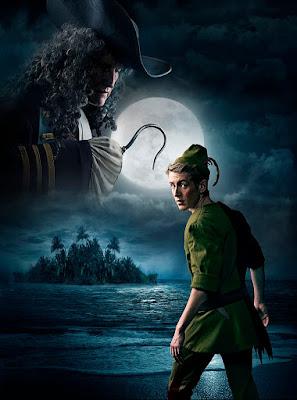
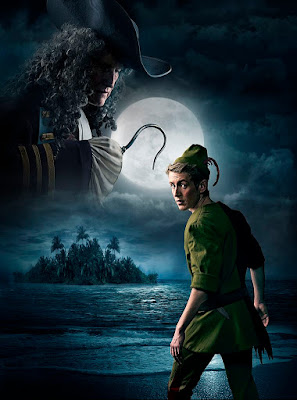
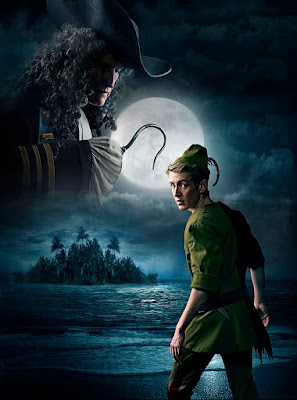
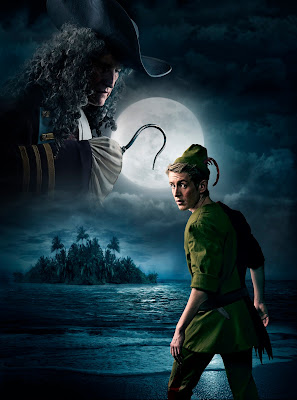
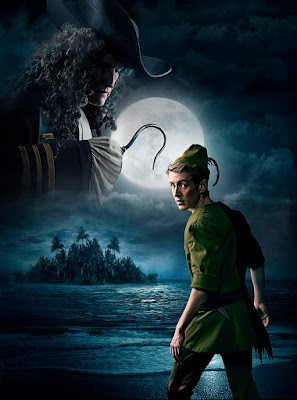
These chapters contain the ending of the battle with Hook, and lead into the return of the Darlings to their home in London. This battle with the pirates will also be involved in my narrative, but much as previous events, their explanation will be completely different. In Chapter 15, Peter begins making his way toward the pirate ship in order to save the kids and battle Hook. He sees the crocodile on the way, and imitates his ticking noise. Though accidental, this trick gives him the upper hand when he arrives at the pirate ship. Despite this being a "children's story," Peter murders several pirates upon arriving at the ship. He hides out in the main cabin, while Hook sends different people in to investigate the mysterious intruder. He then sends the kids in, and Peter frees them before slyly taking Wendy's spot in the shackles. Hook prepares to send Wendy overboard in order to absolve the bad luck that girls bring, when he suddenly discovers that Peter has rep...
EC Reading Notes: Peter Pan, Part G (Ch. 13-14)

Image
Chapters 13 and 14 provide a lot of information that I plan to use in a big final plot event. I am still brainstorming how I am going to wrap up the narrative. I like the idea of a big plot buildup, with perhaps a bit of an unexplained or disappointing ending. But then, the very final storybook story would include the true ending, with a break in the story that returns to the interview between Hook and the investigator. I'm hoping I can work this out in a way that is exciting and sensible. Chapter 13 involves a tricky maneuver of the pirates to lure the children out of the hideout; they play the Indian drum, which signifies that the Indians have won the battle. As the children begin to filter out of the lair, the pirates capture them one by one. Wendy and the boys are all kidnapped and taken to Hook's ship. Peter is still asleep, and Hook poisons his medicine in the hopes of finally ending Peter. However, Tinker Bell, in an act of love, takes the poison instead. She is ...

Reading Notes: Beowulf, Part B

Image
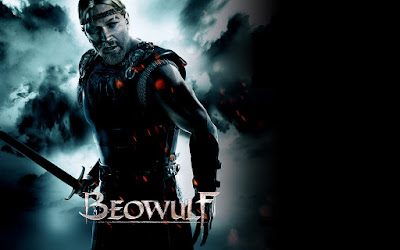
The Battle with Grendel This narrative is intense and bloody. I loved the fight scene! Beowulf, a mighty warrior, is battling against a terrible monster, Grendel. The fight is described as being nearly even, with the two parties struggling back and forth in silence. Both are exhausted, but neither can give up. Finally, Beowulf has an opportunity to gain the upper hand. He swiftly takes Grendel's arm and twists it behind his back. In a moment of pure strength, he actually rips the arm off of Grendel. Before he can do anything else, Grendel escapes into the night, and people flood onto the scene to see what Beowulf has done. There are certainly components of this story that I could incorporate in my own storytelling. This is one of the first significant fight scenes that I have read all semester. I enjoy the intensity of two powers locked in battle. In my own story, I would like to include a fight scene but perhaps in a different context. Though this story is fraught with great...

Reading Notes: Native American Hero Tales, Part B

Image
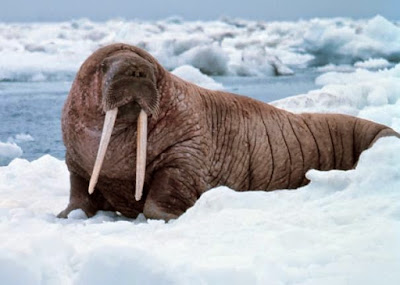
The Jealous Father This story presents a complex plot, all of which occurs because of what the title describes - a jealous father. A man has two wives, one of which bears a son. One day, the father becomes jealous of his son. Because of this jealousy, he tries to abandon his son on an island. However, the mom and dad end up conjuring different things in order to either save or harm the son, in accordance with their wishes. The mom sends a walrus to save the son from the island and bring him back home, whereas the dad sends a thunderstorm to kill this walrus and prevent him from rescuing the boy. The storm succeeds in killing the walrus, but not before the boy has made it back to shore. Once he arrives at the shore, he still has to complete a difficult journey to make it back home. The Jealous Father (continued) On his journey back home, the first obstacle encountered by the boy is that of two old hags. They possess blades on their arms, but instead of stabbing him, they end ...

Reading Notes: Apache Tales, Part B

Image
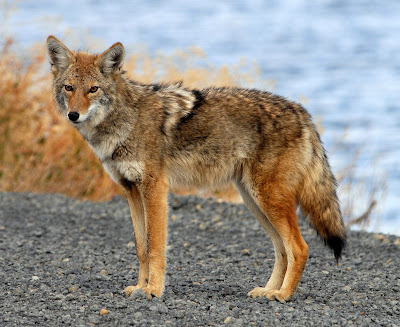
Coyote Steals A Man's Wife This story was almost laughable in its simplicity! I loved it. In fact, we understand the story's namesake after just two quick sentences. Sure enough, a man at a camp was stranded on a rock, and the coyote leaves with his wife! The man eventually gets down, looks for them across the course of several camps, and encounters his wife while coyote is out hunting. He feeds coyote several stones, coyote dies, and then the man and hie wife continue on with their lives. So bizarre! One component of this story is that the author simply adds his audience into the middle of a narrative. There is not really an introduction or a conclusion, but simply the explanation of part of a story, and that is all the picture that we get. Another component that I could use in my own storytelling is this: something occurring to a character which they find harmless, but over the course of time, it has terrible effects. The best example that I can think of is a frog in a...

Reading Notes: Apache Tales, Part A

Image
The First War This story was fairly confusing. Bits of it were understandable, and it held traces of origin stories. I suppose, due to the name, that this is the Apache account of how the first war came about. Other than explaining this battle, there doesn't seem to be much point to this story. Raven (a man? an bird?) at the beginning performs a series of actions to see whether or not people will live, two men have a strange interaction that results with one becoming the grandson of another, and then one of the chiefs and his men fight against an enemy until they are all killed. I am not sure if there are any specifics that I would use from this story in my storytelling. However, if I were to use anything, I would use the general idea of retelling the first time that something happened. It could be an event like this, the first war, except in a different cultural setting. It could also be something entirely different, such as "the first meal," "the first sicknes...

EC Reading Notes: Peter Pan, Part F (Ch. 11-12)

Image
In Chapter 11, we see a further development of some of the themes from Chapter 10. Now that their imaginary dinner is over, Wendy tells the whole crew a story about "the Darling family." She speaks of their dog and their loving parents. However, one day, the young children leave home. They can depend on their mother's unconditional love, though, and find the house open upon their return many years later. Peter disagrees about this being a quality of a mother's love, a feeling which frightens Wendy. She then decides that she and the boys must return home! As I mentioned before, I could certainly use tones from this scene in order to pit Peter against Wendy and her brothers. This would continue their realization of Peter's corruption, since they suddenly have a desire to return home and Peter wants them to stay. Though this happens, I am also trying to create a situation in which Peter comes to grips with his own corruption and has a change of heart before he ge...

Reading Notes: West African Folktales, Part B

Image
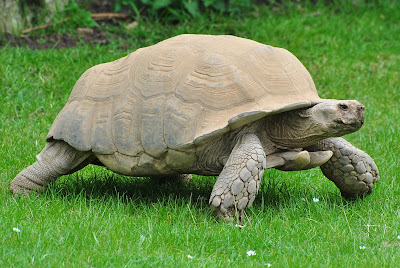
How the Tortoise Got Its Shell I like this story in that it provides an explanation for something that we see today! The story starts out with a king throwing a huge festival, and he needs someone to go fetch some wine for the party. He sends his friend, tortoise, to go get wine from the palm fields of a chicken. First, the tortoise has to fight the chicken in order to access the palm trees and the wine, and he ultimately wins. However, he drinks a lot of the wine before beginning his journey back home. This ends up being a fatal mistake! By the time he gets back to where the king is throwing the festival, the gates are closed and they assume that everyone is already inside. At this point, the tortoise gets trapped outside of the gates for nearly two months, and he dies. Once the gates are opened back up, they discover him underneath a mound of dirt. Through magical medicine, they are able to revive him, but unfortunately, the ceramic pot had molded to his back. This is why tortoi...

Reading Notes: West African Folktales, Part A

Image
Thunder and Anansi This one was one of my favorites of the unit, and perhaps of the semester thus far. This story was not only entertaining, but had several great themes! Anansi suffers from hunger, and by a fortunate sequence of events, ends up receiving a magical pot that makes him any food that he wishes. Though he contemplates sharing the food with his family, Anansi takes a selfish turn and decides to keep the pot for himself. One day, his family discovers the pot, but they manage to lose it while providing meals. When Anansi discovers that the pot is missing, he returns to the original location in hopes of receiving another magical gift. Instead of more favor, he receives a stick that beats him, presumably because of his selfishness! I appreciate the themes in this story. First, we see a subtle theme that a father should provide for his family. However, another message proves even more apparent - that being the selfishness of Anansi. It originally serves him well, but event...

EC Reading Notes: Peter Pan, Part E (Ch. 9-10)

Image
The readings for this week were rather interesting, and I am interested to see how the material from the original will manifest in my retelling. In Chapter 9, we see an interesting exchange between Peter and the Neverbird. She offers her nest to him as form of help, and he ends up floating safely to shore. Chapter 10 reveals some interesting themes. In this section, Peter, Wendy, and the whole crew prepare to have a wonderful dinner together. However, like some others, this is a make-believe meal. There is an interesting exchange between Peter and Wendy where they almost act as if they are the parents of the setting. Pan quickly asserts that he could not be a father because that would make him too old. Wendy wants clarity on his feelings for her, but Peter reiterates that he views her as a mother. The dinner as a whole has heightened intensity in retrospect, for it is the last meal that the group will share before everything changes. I am still considering some different optio...

EC Reading Notes: Peter Pan, Part D (Ch. 7-8)

Image
Quite a lot happens in these chapters of Peter Pan! First, Wendy and her brothers begin to make their homes on the island of Neverland. Peter makes accommodations for them, and they soon have almost regular lives. Wendy serves as the mother of the clan, and her brothers are incorporated into the group of Lost Boys. They undertake many exciting adventures! In addition to the tales of the kids, we also see more of Captain Hook in these chapters. He is disappointed to learn that Peter and the Lost Boys have gained a mother, and in fact, the other pirates are disheartened to hear about this as well. They decide that they must do what they can to retrieve Wendy so that she can be their mother instead. Through a turn of events, there is a short and intense battle between the boys and the pirates in the lagoon. Peter and Hook fight, and Hook's unfairness catches Peter by surprise. He and Wendy are injured, but Hook has to flee because of the danger presented by the crocodile. At ...

Reading Notes: South African Folktales, Part B

Image
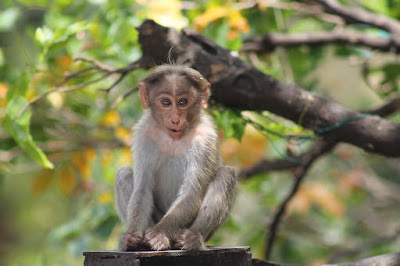
Jackal and Monkey Though this was a short story, I found it very interesting. I was very caught off guard by the abruptness and violence of the ending. This could be turned into a different story by changing the characters, but keeping the general story the same. I would also be interested in rewriting the ending, since the monkey getting shot occurs without much explanation. It could be a lot more positive. Instead, the monkey could explain the true situation to the boar. The two could conspire to actually catch the jackal by devising another trap. The Story of Hare This story was very bizarre. To be honest, I still am not sure if there was much of a point. It seems that the cleverness of the hare was a central theme. Essentially, a group of animals sets a piece of fat in the middle of a corral, and they take turns guarding it. As each one guards the fat, a strange animal comes up, sneakily eats it, and the animal on guard ends up being put to death. Finally, the hare outsmar...

Reading Notes: South African Folktales, Part A

Image
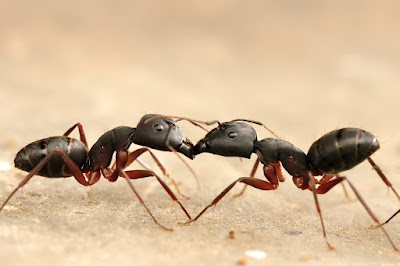
The Lost Message I loved the explanation that this story provides! It describes the varieties of ants and why each group has its own way of living. Ultimately, different types of ants exist because they brainstormed various methods for evading their predators. The species as a whole could never achieve unity, since the beetle, the "unity messenger," never arrived to them. Thus, there differences exist to this day. I think this would be a great story if translated into other characters. For example, I think that parallels could be made with the biblical story of the Tower of Babel. Also, an interesting thought would be groups of humans experimenting with their skin colors based on where they lived and the environmental conditions, ultimately leading to a lack of unity. The Monkey's Fiddle This story contains many trickster elements. I almost noticed hints of themes from Arabian Nights. Just as Scheherazade's stories become increasingly intertwined and complex,...

Reading Notes: The Voyages of Sindbad, Part B

Image
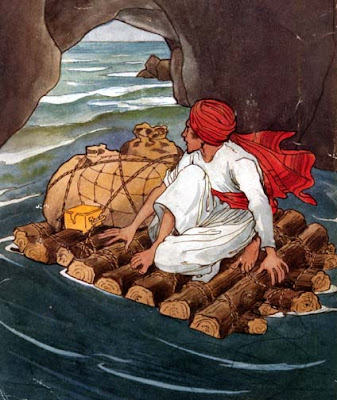
Sindbad: Fifth Voyage A common theme is emerging in these stories. After a disastrous turn of events out at sea, Sindbad always fortunately floats from the wreckage to an island. Awfully fortunate to happen again and again. The beginning of this story lends some opportunity to creativity. Sindbad and a group of sailors come to an apparently uninhabited island, but they end up finding the egg of a roc. They smash the eggshell and kill the bird, inciting the wrath of the parents. Almost immediately, the parent birds return to smash the ship. One of my favorite storytelling methods is to reframe the perspective with which the story is told, because of the opportunities for varying details and themes. I think it would be a creative turn to tell this story from the perspective of the family of birds, or even just from the parent birds. They are continuing on about their normal lives, when all of a sudden, a terrible group of humans appears on their island and kills their child! Addit...

Reading Notes: The Voyages of Sindbad, Part A

Image
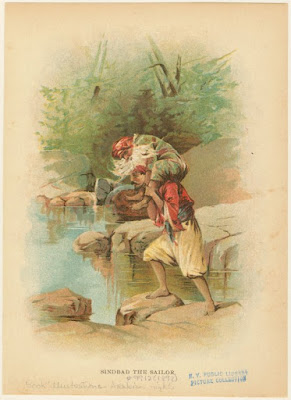
Sindbad: First Voyage There are certainly some interesting twists to this story so far. I will say, upon reading this specific story, although it has been likened to the Odyssey, it does not quite possess the same features of entertainment. I'm hoping this will change throughout the narrative. At the beginning, I almost noticed some prodigal son-esque features - a young man who squanders all of his wealth. However, the predominant feature of the narrative thus far is that the crew of a ship mistakenly takes a large whale for an island. In the chaos of the whale going back under water, Sindbad becomes separated from the crew and lands upon some cliffs, meeting inhabitants soon thereafter. A funny twist would be to tell the story from the whale's perspective. Also, had Sindbad not met the inhabitants when he did, his story would be very different! Sindbad: First Voyage (continued) The story takes a surprising twist in this episode. The Sindbad's original captain retu...

EC Reading Notes: Peter Pan, Part C (Ch. 5-6)

Image
This week, I continued to grow my foundation for my Peter Pan semester project! Strangely, the original story offers more and more proof for the chaos that Peter brings to Neverland. While he is gone, the island is described as being peaceful and lazy, since there is no fighting going on. I can add this in a description for one of my stories. Another twist that I can utilize is by explaining the condition of the Lost Boys. These are young boys that still have imaginations and have somehow made it to Neverland. Essentially, they are Peter's gang. However, the Lost Boys can "die in battle," or sometimes, Peter even "thinks them out" of Neverland. But what does this mean? I think I can provide two possible answers, either of which could be used in my story. One, these boys leave Neverland because they have lost the imagination that brought them there in the first place. The second option is that Peter sends them away once he no longer has any use to him. Per...

Reading Notes: Arabian Nights, Part B

Image
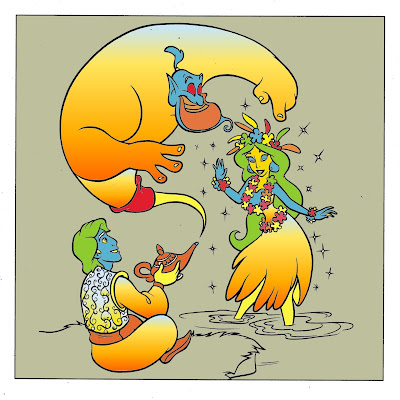
Story 1: Aladdin and the Wonderful Lamp 1 I like in this story how the magician's evil plan backfires. He first deceives Aladdin into thinking that he is his uncle. Poor Aladdin! He blindly follows this man, hoping to eventually find a trade. The magician thinks that he can trick Aladdin into fetching this magic lamp, but has forgotten the obstinance of the young boy. By the end of this story, Aladdin is trapped into a dark cave, with nothing but the lamp and the ring! However, as he rubs the ring, a genie appears. One of the elements of this story that I could use is, as specific as it sounds, the idea of somebody pretending to be a relative in order to get something that they want. Oddly, this reminds me of the movie Wedding Crashers! Story 2: Aladdin and the Wonderful Lamp 2 Here is another crazy sequence of magical events. I love that Aladdin and his mother now have access to two genies. They can ask for whatever they want! And indeed, they manage to live off these ma...

Reading Notes: Arabian Nights, Part A

Image
Story 1: Scheherazade This tale provides the introduction to the Arabian Nights sequence. In it, a brave young girl named Scheherazade has taken it upon herself to stop a terrible evil committed by the sultan. He was deceived by his own wife, and as a result of his anger, he has promised to sentence all of his future wives to death. He marries a new one each day and has her killed the next morning. However, Scheherazade has a plan to stop this, though this plan is not yet clear. At this point, she has begun a story just in time before her death. I could use several themes from this for my own storytelling. I like the idea of a brave character choosing a circumstance of near certain death, but with a plan of action for how to adjust his or her fate. I assume that Scheherazade has something in mind to avert the sultan's usual action. Perhaps this story would also look different if the roles were switched, and someone made a deal to assassinate the sultan. Story 2: The Merchant...

EC Reading Notes: Peter Pan, Part B (Ch. 3-4)

Image
This week's reading notes cover chapters 3 and 4 of Peter Pan, which is continuing to form the basis of my semester project. In chapter 3, Peter has officially arrived on the scene. He has come to retrieve his shadow, which Wendy ends up needing to sew onto him. He interacts with Wendy, meets her brothers, and ends up showing them how to fly! They end up flying to Neverland, just before the Darlings can return home to find out what has happened. Chapter 4 recounts their journey on the way to Neverland, which lasts over the course of several days and nights. The kids, meaning Wendy and her brothers, learn about the magic of Neverland as well as its infamous villains - Captain Hook and his crew of pirates. The chapter ends as the pirates fire at the group, splitting them up. There are several valuable components from these chapters for my story. We see several interesting displays of Peter's character. He is shown to be insensitive to Wendy when they first meet, and eve...

Reading Notes: Homer's Odyssey, Part B

Image
Story 1: The Ghosts of Famous Women To be completely honest, this story seemed little more than simply a string of long names from Greek mythology, including family lines and relations to various gods and goddesses. However, I like the overall idea - that Odysseus has come into contact with this red carpet-esque group of people. Surely this added excitement and awe for the people that read the story, having knowledge of the characters. With regards to a potential story from this plot, I could see the expansion of the Oedipus scene as a crazy narrative. As briefly described in this story, Oedipus is a character that kills his father and weds his mother, the plot from which we derive the term "Oedipus complex." It would be interesting to invent a ridiculous situation in order to explain a modern phrase! Story 2: The Spirit of Achilles This story presents a theme not uncommon throughout history: the desire of a father for the success of his son. I think this has strong ...